Why Kutná Hora Is Not Just For Tourists – Art, History And Wine • SOLARIS Language School
Why Kutná Hora Is Not Just for Tourists – Art, History and Wine
BLOG - Czech Culture Chat, Uncategorized
9. 2. 2026
Karolina Wencelová
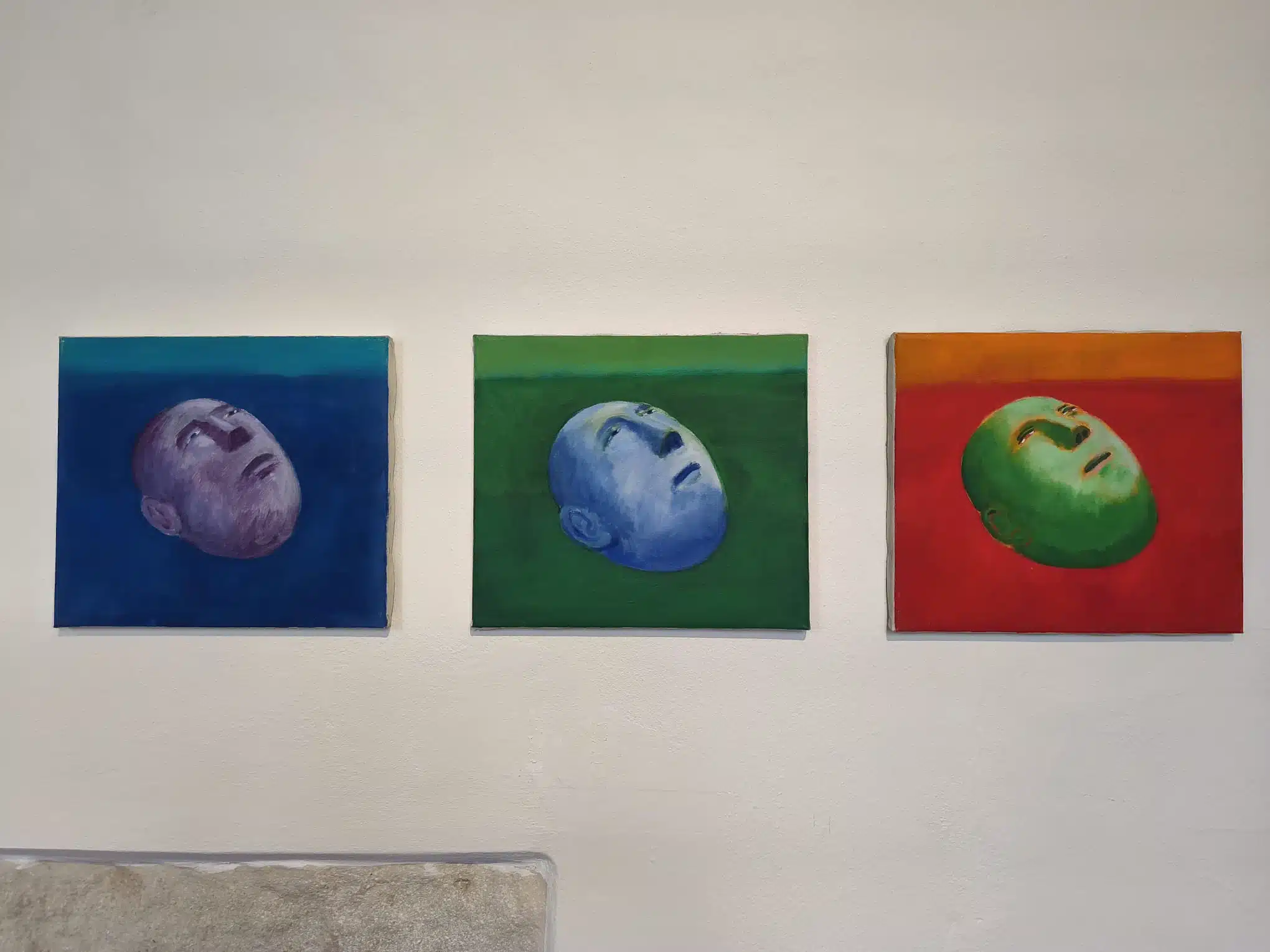
Jiří Sopko: Untitled 1–3, currently exhibited at GASK in Kutná Hora — a cultural tip from SOLARIS Language School for students exploring Czech life while learning Czech.
But did you know that right in the historic centre of the town, in the unique spaces of a former Jesuit college, there is a very interesting gallery? The Gallery of the Central Bohemian Region – GASK – is housed in this remarkable building whose construction started in 1666. It boasts a major exhibition programme and dedicated contemporary art spaces. The three floors of this Baroque building offer one permanent show (currently the new Through the Labyrinth) plus a dynamic array of temporary exhibitions running at the same time.
The artworks are presented in the impressive settings of historic Baroque halls – refectories, cellar spaces, and lofty rooms – after a huge reconstruction that ran between 2004 and 2012, creating a contemplative atmosphere that contrasts beautifully with the contemporary art on display.
The current block of exhibitions, on view until 1 March 2026, includes several fascinating shows. Among them are exhibitions by two Czech artists organised on the occasion of anniversaries of their births:
· Dalibor Chatrný 100 (performer, graphic artist, land artist) – created on the occasion of what would have been the artist’s 100th birthday. · Alena Kučerová 90 (graphic artist) – marking the 90th anniversary of Alena Kučerová’s birth, which she celebrated last year; sadly, she passed away in January this year.
Dalibor Chatrný at GASK, Kutná Hora — a cultural insight shared by SOLARIS Language School for students discovering Czech life while learning Czech.
I would now like to introduce you to the work of Alena Kučerová, who is one of my favourites and a uniquely original artistic personality. At the root of her creative originality was practical necessity. Alena Kučerová was a trained graphic artist, and as a material she needed zinc plates to engrave into. However, at the time of her greatest creative output, zinc was either unavailable or too expensive, so she had to make do with tin sheets used for making food cans. These were cheap but too soft for traditional engraving.
Alena Kučerová: The Following, exhibited at GASK in Kutná Hora — a cultural recommendation from SOLARIS Language School for students exploring Czech culture while learning Czech.
She therefore came up with an original solution – she began to make small holes in the metal using tools she had inherited from her grandfather, who was a shoemaker. With these tiny perforations she created lines forming both figurative and abstract compositions. Her aim was to offer viewers beautiful moments in the middle of the depressive reality of totalitarian Czechoslovakia (before 1989) – moments such as swimming, time by the sea or in a sauna, trips to nature, or driving a new car.
The perforated metal sheets were then printed onto paper, and in addition to sensitive, minimalist prints, she also exhibited the metal plates themselves as remarkable objects in their own right.
Alena Kučerová: Surface, exhibited at GASK in Kutná Hora — a cultural tip from SOLARIS Language School for students exploring Czech culture while learning Czech.
In another part of this extensive gallery you can visit the exhibition 12/15 Cometh The Hour — a show by a group of artists who were active between the mid-1980s and mid-1990s, reflecting artistic expression during pivotal moments before and after the Velvet Revolution. Their works share an expressive style, irony and playfulness. Some of these artists are associated with Czech grotesque.
Among the names who became well known after years of unofficial activity are the painter Jiří Sopko with his vividly coloured figurative paintings, the sculptor Kurt Gebauer, and Michael Rittstein, known for his expressive paintings ironically commenting on societal situations.
Their exhibition full of irony, playfulness and humour was a very pleasant refreshment for me.
I will not describe the other exhibitions that GASK offers in February, and instead I recommend that you go and see them with your own eyes.
Michael Rittstein: Mixed Marriage, exhibited at GASK in Kutná Hora — a cultural insight shared by SOLARIS Language School for students exploring Czech culture while learning Czech.
And I would like to add one completely non-artistic, but personal tip. Did you know that in Kutná Hora, right near the Church of St. Barbara, there is a vineyard where wine is grown? The local winery Vinné sklepy Kutná Hora produces biodynamic wines certified under the Demeter standard — one of the few certified biodynamic wine producers in the Czech Republic.
Visiting cultural places like GASK in Kutná Hora is a great motivation to learn Czech. Even basic Czech language skills help you understand signs, exhibitions, and everyday communication while living in the Czech Republic.